
Thanks to technological developments, graphic design and marketing have changed dramatically. Among the most essential instruments enabling this change is desktop publishing (DTP). DTP has evolved into a necessary tool for creativity and efficiency regardless of your role—graphic designer developing complex designs, small company owner producing marketing materials, or marketing expert trying to create powerful campaigns.
But precisely what is desktop publishing? What is its future, and how will it help professionals? This handbook explores these issues and provides the information you need to use desktop publishing for your projects.
DTP: An Interpretive Guide with Evolutionary Notes
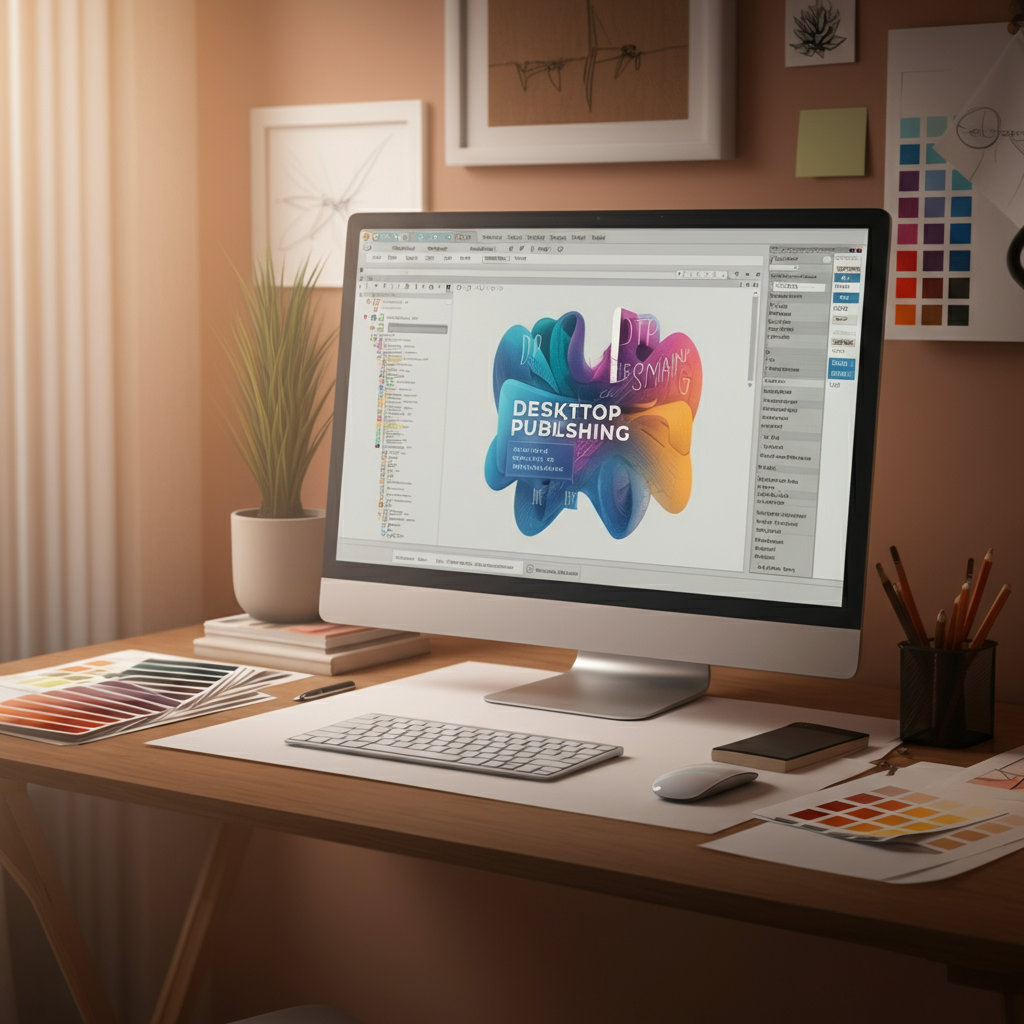
Often shortened to DTP, desktop publishing is a software program that produces layouts and graphic messages for print and digital media. It includes tasks such as business cards, newsletters, posters, pamphlets, and online graphics.
With programs like Adobe PageMaker and Apple Macintosh computers, desktop publishing started to take off in the middle of the 1980s. This technique replaced the need for specific typesetting equipment by letting consumers manage design. It developed gradually into a flexible toolkit for personal and professional design requirements.
Desktop publishing is now essential in design and marketing. Modern technologies like Adobe InDesign, Canva, and Affinity Publisher let experts and novices access DTP, enabling everyone to create excellent designs.

Essential advantages of desktop publishing
Why is desktop publishing so crucial in current design and marketing? DTP’s main advantages make it a game-changer: improved design efficiency.
1. Enhanced Design Efficiency:
Desktop publishing tools simplify design. While guaranteeing aesthetically pleasing outcomes, prebuilt templates, drag-and-drop tools, and sophisticated editing capabilities save time. Unlike beginning from scratch for every project, designers may quickly alter layouts.
2. Economical Reversibility
Before desktop publishing emerged, graphic design required major investment in specialized equipment and outsourcing to expensive designers or firms. However, using DTP software, individuals and small companies may produce beautiful marketing materials at a fraction of the cost.
3. Creative Liberation
Modern DTP tools’ adaptability helps users explore many design styles, typefaces, and color palettes. While creatives may express their ideas completely without restrictions, businesses may match designs with their own branding.
4. Enhanced Transmission of Information
Through carefully crafted marketing material, desktop publishing improves communication. Effective message delivery via clean layouts, simple information arrangement, and aesthetically pleasing aspects guarantees that the audience will absorb the message and influence potential consumers.
5. Harmony Between Platforms
Keeping design consistency in branding across print and digital media may be difficult. Desktop publishing solutions provide a consistent appearance and message by allowing one to modify and standardize designs for several outlets easily.
Selecting the Correct DTP Software
Selecting the correct program to fit your requirements will primarily determine the success of desktop publishing. These are a few highly ranked instruments with unique qualities:
InDesign from Adobe
Considered a pillar of the design community, Adobe InDesign provides strong capabilities for designing excellent layouts for digital and print media. It’s fantastic for sophisticated users needing exacting design.
Canva
Popular among non-designers, Canva has an easy-to-use interface and a wealth of customisable templates. It’s ideal for infographics, social media visuals, and brief marketing pieces.
Affinity Publisher
Often regarded as a less expensive substitute for Adobe products, Affinity Publisher offers professional-grade features for small companies and designers seeking more reasonably priced solutions.
Microsoft Publisher
Microsoft Publisher is ideal for novices or teams using the Microsoft Office suite because, while more straightforward than other tools, it efficiently meets small-scale design demands.
When choosing desktop publishing tools, consider your objectives, technical knowledge, and money. Try a couple of free trials to see which tool best fits your requirements.
Best Standards for Superior Desktop Publishing
Learning desktop publishing transcends simple software selection. Following these recommended practices can help your designs to be better:
1. Prepare Ahead of Design
Begin with a well-defined goal. Think about your project’s goal, your intended audience, and the message you want to transmit. Excellent design starts with a well-considered strategy.
2. Utilize grids and guides.
Grids and guidelines enable you to keep your designs in line and consistent distance apart. These instruments guarantee a neat and professional appearance of your plan.
3. Match Fonts Wisely
Design depends much on typography. To maintain legibility and avoid visual clutter, limit your font selections to two or three complimentary types.
4. Improve Pictures and Graphics
Professional publication depends critically on excellent graphics. To guarantee things appear excellent online and in print, use high-resolution photographs and keep file sizes small.
5. Review Carefully Proofreading
Even the most exquisite designs may be ruined by typos, or grammatical problems. Always proofread your work and call on a second set of eyes to guarantee excellence.
6. Scalability of Test Design
View how your design appears on many media and sizes. Whether it’s a business card or a billboard, your design should be aesthetically pleasing and legibly clear.
Case Studies: Effective DTP Programmes
First case study: overhaul of a small business brochure
Desktop publishing helped a neighborhood café update its out-of-date brochures. In only one month, they boosted foot traffic by thirty percent using Canva’s simple-to-use templates and included high-resolution photos of their menu items.
Second case study: event marketing for a nonprofit.
Using Adobe InDesign, a charity created visually arresting posters for a fundraiser. Thanks in part to their professional appearance and constant branding, the charity benefited from thousands of dollars raised.
These success stories show how powerful desktop publishing can be, when used deliberately to fulfill particular objectives.
DTP’s Future: Developments and Forecasts
Desktop publishing should become more accessible and strong as technology develops. These tendencies will help to define its future:
- Artificial intelligence integration
DTP systems already include artificial intelligence to recommend design enhancements, automate labor-intensive processes, and improve user experience.
- Cooperative Attributes
Desktop publishing technologies are introducing real-time collaboration capabilities that smooth out cooperation while teams work remotely.
- Sustainability in Design
As eco-friendly methods become increasingly important, designers are inspired to produce more sustainable designs, such as digital asset optimization or paper waste reduction.
- Personalism
Marketers are using data-driven insights to provide customized designs that fit individual tastes, improving audience involvement.
Encouraging Originality with Desktop Printing
Desktop publication has changed how companies and people approach design. Its easy production of professional-grade materials has democratized design and allowed everyone to investigate its potential creative power.
Desktop publishing is the key to opening fresh possibilities, whether your firm is tiny and you are presenting your brand, a designer trying to hone her trade, or a marketing expert providing value via creative campaigns.
Maximize desktop publishing tools, try many styles, and see your ideas come to life. Start planning your current strategy to use visual storytelling to change your communication and connection style.
Conclusion
Desktop publishing has become a necessary tool for creative expression and efficient communication. Giving people and companies both readily available, professional-grade design tools enables them to produce powerful stuff that enthralls viewers. The opportunities are unlimited whether one is developing a brand, creating marketing campaigns, or investigating personal ideas.
Desktop publishing provides opportunities for visual storytelling and meaningful involvement with the correct tools and a ready-to-try attitude. Starting your desktop publishing path now will help you to realize the potential of precisely, stylish, versatile expression of your creative ideas. Design’s future is within your grasp; welcome it.